translate This article was automatically translated from its original Français version. Read the original
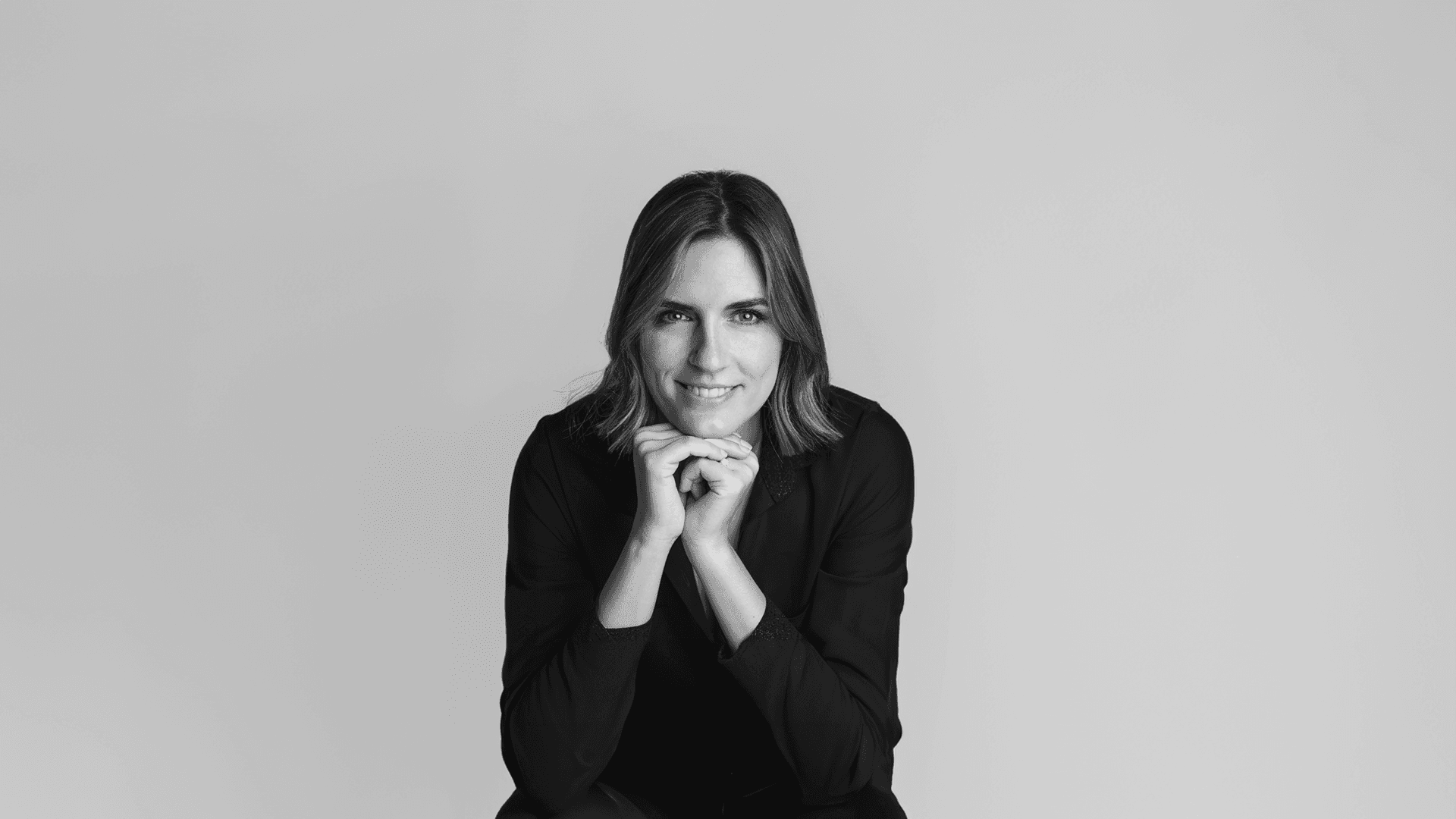
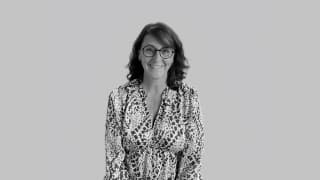
Claire Bretton is the founder of Underdog, a company that refurbishes large household appliances. While smartphone refurbishment has become common, what about home appliances?
25 million household appliances are thrown away each year in France... and only 3% are refurbished: an economic and ecological waste.
Refurbishment thus offers a more affordable option for consumers, allowing access to quality equipment at a lower cost. Moreover, since repairing washing machines is not within everyone's reach and is reserved for certain technicians, it also promotes job creation in the refurbishment sector, thereby stimulating the local economy.
It is from this observation that Claire Bretton founded Underdog .
If you want to deepen your knowledge on this topic: https://www.airzen.fr/reconditionnement-cyclink-prolonge-la-duree-de-vie-des-velos/
Juliette Boulegon
impact.info journalist
Published on 12 December 2023
Transcript Audio in Français — text automatically translated· AI-generated transcript
0:00 Hello, this is Juliette and welcome to the podcast for those who want to make 0:10 a difference within their company. 0:13 Reconditioning, this word is known for smartphones and other small electronic devices, 0:18 but much less for large household appliances, which ultimately consume the most. 0:24 But then, can we trust a washing machine that has already spun 0:28 clothes for several years? And what cost does that have? And above all, what environmental impact 0:34 does this purchase have on our lives? Claire Breton created Underdog. 0:38 Hello, I'm Claire Breton, I'm 35 years old, I was born in Rouen, in a countryside 0:45 not far from Lyon, and today I am the co-founder of Underdog, which specializes in 0:50 reconditioned large household appliances. 0:51 So, in a few words, what is Underdog? 0:54 We collect large household appliances, typically washing machines, dishwashers, 1:00 we repair them in our reconditioning center in Nantes with our professional technicians 1:05 and we sell them on our platform called underdog.shop. 1:08 So, when you created this company, did you start from a realization 1:13 to develop it? Absolutely, we started from two figures. 1:16 The first is 25 million, today in France, there are 25 million appliances 1:23 whether large or small, that are thrown away each year. 1:26 25 million. 1:27 And on the other side, the other figure is 3%, only 3% of the large household appliance market 1:33 is reconditioned today. 1:34 So it's both an economic and ecological waste and we thought we had to 1:38 do something about it. 1:39 Can you give us some figures regarding the lifespan of a 1:41 washing machine? Today, the average lifespan of a 1:45 washing machine is 7 years, which means that the French change their 1:48 washing machines every 7 years. 1:51 We reach the end of the chain, meaning we collect machines that have had a 1:54 problem, that have broken down, and we recondition them. 1:57 The goal is for them to come out as new as possible from our reconditioning center. 2:02 When we talk about reconditioning, we will both address the breakdown, but we will also 2:06 replace parts with new ones. 2:08 So the idea is that when the machine leaves our workshop, it has a lifespan 2:14 as if it were new, and that's why we can offer a 2:18 warranty, just like on all new products, of 2 years. 2:21 And what would you say to people who are still hesitant about reconditioning? 2:27 A lot of things. 2:28 The first is that, one, it's a big ecological impact to choose reconditioning 2:33 since we no longer have to produce a new machine. 2:36 The second is that there is a big impact on our clients' wallets since 2:40 Now, we are able to offer an average of less than 30% off the price of new products. 2:46 And thirdly, there is a big quality issue that we have addressed by having our own 2:51 refurbishment center. 2:52 We are based in Nantes, we have a small team of about ten technicians. 2:56 These are technicians who specialize in household appliances. 2:59 So, all day long, they will diagnose the machines, repair them, 3:03 test them with real laundry, for example, for washing machines. 3:06 And we ensure quality standards at all the control points that need to 3:11 be checked. 3:12 So, for me, refurbishment today is a real alternative. 3:16 Now, we have standards that ensure it's the same quality as new, cheaper 3:20 than new, and with a positive ecological impact. 3:23 Do we have an idea of the environmental impact that a washing machine has? 3:27 In fact, today, what we know about large household appliances is that we haven't yet 3:32 received very solid studies to communicate on CO2 impact or the impact of the number 3:40 of kilos of materials needed to build a washing machine. 3:43 What we know is that today, a washing machine weighs about 60 kilos. 3:48 And the other thing we know is that most washing machines are produced 3:53 either in Asia or in Western Europe. 3:56 So, there is both an impact from material extraction, production, but also from 4:01 transportation that is significant. 4:03 Whereas we, the refurbishment industry we are building, aims to be local since these are 4:09 large products that are expensive to transport. 4:13 So, our sourcing, our supply, is French. 4:16 Our refurbishment is 100% French in Nantes. 4:20 And then, we deliver throughout France. 4:23 But this is not at all a business where you can source from the United States, repair in Asia, and sell in France. 4:27 It's very local. 4:30 But beyond the environmental impact, I imagine there are many other advantages 4:30 to buying a refurbished machine. 4:35 Yes, we see it every day, especially in a context of high inflation. 4:38 Today, we offer products that are on average less than 30% compared to 4:42 the price of a new one. 4:46 It can go up to less than 50%. 4:47 But even if I take less than 30%, you see, a washing machine or a fridge is on 4:49 average 600 euros including tax. 4:54 So, when you do less than 30%, you end up with savings that are quite considerable. 4:57 When you have to change your equipment or move and buy several appliances. 5:01 Price is clearly the number one decision factor for our customers. 5:07 5:10 Have you been able to see a positive impact on society and more broadly on your clients? 5:15 There are human stories, we have them every day. 5:16 First, with our clients who were wondering whether to switch to refurbished products or not. 5:18 They saw the ecological benefit, they saw the financial benefit, but they still had a hard time taking the plunge. 5:23 And we manage to convince them through the customer experience we've built. 5:24 So that's really great and we see that word of mouth works. 5:27 So it's super positive. 5:30 And the other very positive human aspect is all the work we do with technicians. 5:34 It's important to know that this is a big challenge in our market. 5:38 It's a manual sector that has been completely neglected by training programs. 5:40 And so, it's a profession where we lack talent. 5:45 So we launched our own training and retraining program. 5:47 And it's really amazing to see people who came in not necessarily knowing how to repair appliances, but who knew how to repair other things. And with our technicians and teachers guiding them, they are now able to repair several machines a day. 5:50 So it's really great to see them evolve. 5:54 And then, in your opinion, is the future refurbishment? 5:57 We set ourselves a very strong ambition, but it's ultra clear. 6:01 We want to create a new industry, a new industry that is much more virtuous and we want to prove that it works. 6:06 That is to say, we want to build an industrial tool that is replicable, that is profitable, so that many other refurbishers can start and we create a real sector in France for the refurbishment of large appliances. 6:09 And so, for us, it's clearly the future. 6:13 A future that has an impact, as we said, financial, that has an ecological impact, of course, and that also has an impact on the reindustrialization of territories and an industrialization that aims to be green. 6:16 So, very virtuous on all fronts. 6:19 And that's why we are convinced that it's the future. 6:24 Impact.info, doing business differently. 6:27 Did the child or teenager of 16 imagine doing what you do today? 6:30 I might go back ten years, to when I was six. 6:33 I have a very strong memory of telling my father at six that I wanted to be a boss. And so, he laughed a bit at the time, but I became one. 6:36 6:40 6:45 6:47 6:52 6:56 6:59 7:03 7:06 7:10 7:15 7:15 7:19 7:24 7:29 business leader. 7:32 It's not the same vision as when I was six years old. 7:34 I thought I would decide everything. 7:36 But actually, I come back to the point where, with entrepreneurship and being a business leader, 7:41 you work to define a world that is much more in line with 7:46 your values. And I would say that I have reached what that little 7:50 girl at six years old was saying. So, I'm pretty happy. 7:55 Thanks to Claire Bretton, who is the founder of the company Underdog, which 7:59 refurbishes household appliances. 8:01 And you can find this meeting on our site Impact.info, 8:06 in the ecology section, which brings together all the episodes about concrete and useful 8:10 environmental innovations. 8:14 Impact.info, doing business differently. Embed this interview on your site
Show this player directly on your site to share the interview with your audience.
Copy embed code View generated code