translate This article was automatically translated from its original Français version. Read the original
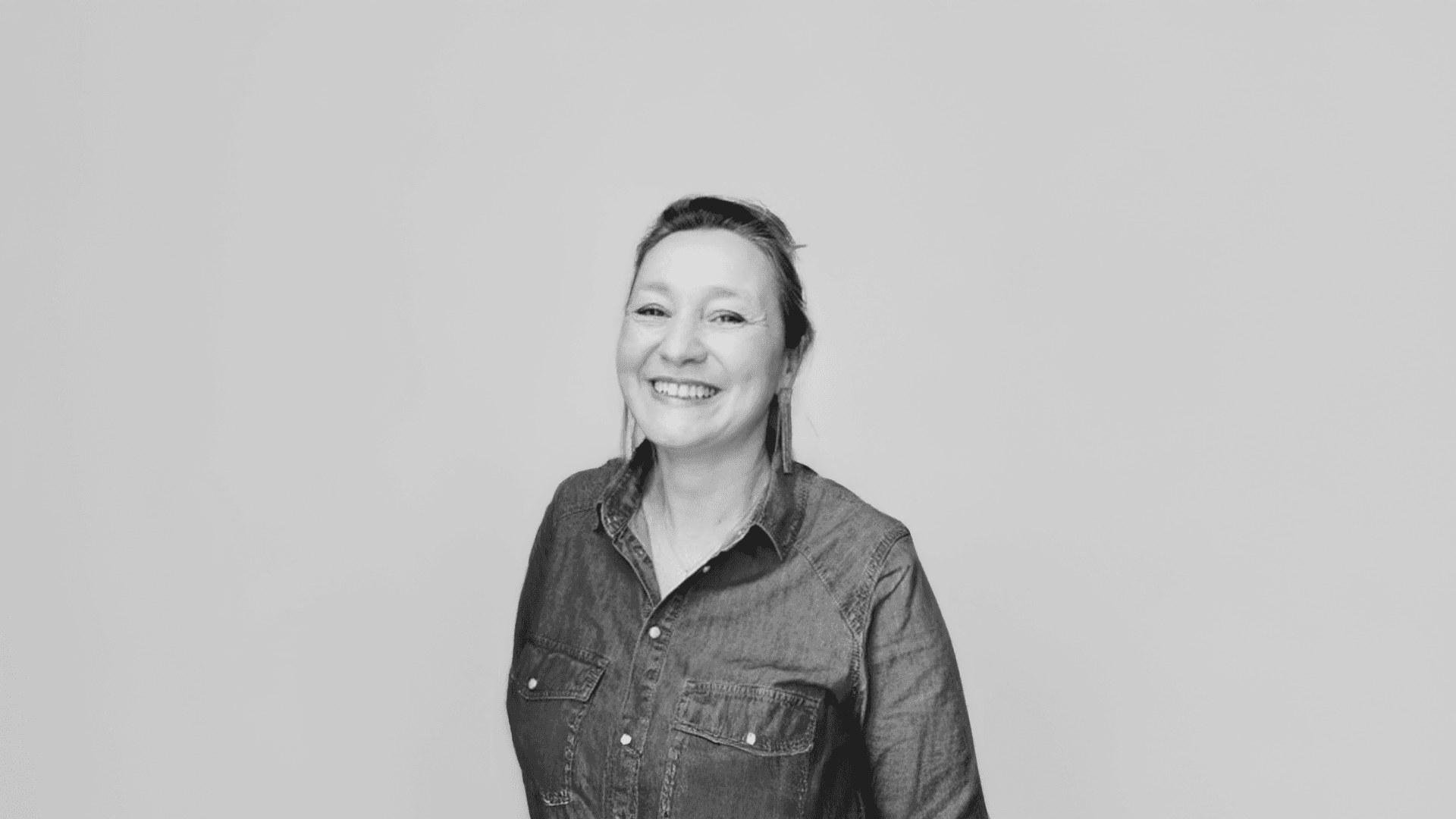
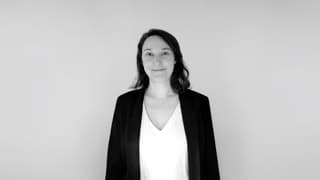
Céline Sanchez, General Delegate of the Fondation Crédit Agricole Brie Picardie and Head of Solidarity Development, leads initiatives like the Passerelle association, which provides free assistance to those excluded from traditional banking systems.
Florence Jaillet
impact.info journalist
Published on 5 December 2024
Transcript Audio in Français — text automatically translated· AI-generated transcript
0:00 Hello and welcome to the podcast for those who want to change the game 0:09 within their company, by daring, by trusting project leaders in their 0:14 territory. 0:15 Céline Sanchez. 0:16 I am Céline Sanchez, I am 53 years old, I am married, have 3 children and I am the general delegate 0:23 of the Fondation Crédit Agricole Brie Picardie and responsible for solidary development, 0:28 which includes the Passerelle association, which is an association that helps 0:33 people excluded from traditional banking circuits for free. 0:37 What motivated the creation of this foundation? 0:39 The Crédit Agricole Brie Picardie wanted to establish a corporate foundation at the end of 2020 0:46 following a donation fund that operated for 10 years, and in fact to have 0:52 a stronger footprint in the territory and really support the residents 0:57 of the area more. 0:58 Today, we operate in three departments: Somme, Oise, and Seine-et-Marne, and 1:03 it was important for our bank to have a powerful sponsorship tool that works 1:09 for the public good in a completely selfless manner. 1:11 What are the themes of the projects you support? 1:15 So today, the foundation operates on four axes, the first being solidarity 1:21 and social cohesion, so really here we will work on everything that is in favor 1:25 of integration in the broad sense, supporting people with disabilities for 1:30 example, school dropout or combating isolation. 1:33 A second axis focuses this time on innovation and creation with support 1:39 for research programs in the fields of health or sustainable development 1:43 or artistic creation for example. 1:45 A third axis, much more common for a foundation, is the enhancement 1:51 of the territory with projects in the field of heritage, whether they are natural, 1:56 intellectual, industrial, or built real estate in a more classic way. 1:59 And finally, a last axis on health and well-being, where we pay particular attention 2:07 to prevention and combating medical deserts, access to care, 2:12 improving the quality of life, and access to culture for all. 2:15 So how will this support manifest? 2:18 This support is already manifested by the possibility for project leaders to reach out to us 2:24 four times a year through board meetings and also through a call for projects 2:29 that we conduct every year in the field of social and solidarity economy. 2:34 This means that today a project leader, so an association that has been in existence for at least a year 2:41 and is eligible for sponsorship can present a project, provided that it fits into our intervention axes, 2:46 and this project will be presented to a board of directors that is completely sovereign and will decide to help, to subsidize 2:51 up to the amount requested or with co-financing for example. 2:57 In any case, there is really the opportunity throughout the year to reach out to us for. 3:01 3:06 to know if the administrators are really committed to defending this project in the territory. 3:13 Moral support, human support, it allows you to be part of a family, a group as well? 3:20 So today, support is mainly financial in our areas of intervention. 3:26 A project leader can reach out to us for a project starting at 10,000 euros. 3:30 You talk about support, today we want to be much more than just financial support. 3:36 By the way, we conducted an impact assessment that shows how much we are identified 3:41 as a creator of links and trust. 3:44 We are not just a simple grant distributor, we really care about being attentive 3:49 to the territory, supporting projects, following projects, and not just limiting ourselves 3:55 to a simple financial grant. 3:58 And in this regard, we are identified as a foundation that dares, I take up the 4:03 words from the impact assessment or the testimonials we've gathered, since we finance 4:08 both classic investments and operational costs. 4:14 And that's something quite strong and marked in our foundation, 4:18 that is to say, we dare, we are often the first funder and that allows our 4:23 project leaders to also dare to meet other funders and have 4:30 a bit of a label, the guarantee that when you've been supported by the Fondation Crédit Agricole 4:36 Brie Picardie, you have a sort of seal of trust and I want to say that's a real 4:41 support beyond even financial support. 4:44 Do you have any examples? I know it must be difficult, there are so many supported projects, maybe the first one that is ongoing with one or two 4:47 projects that come to mind? 4:53 Since the creation of the foundation at the end of 2020, we have supported more than a hundred 4:55 projects, it's hard to single one out specifically but we have a very emblematic project 5:01 on the Chantilly forest which is a true open-air laboratory today and allows us to work on the decline of the forest 5:07 and that's something that affects our three departments and that affects, I want to say, all citizens so that's a project that really matters to us 5:12 in the development of the RIMP because once again, even if this project is based solely 5:19 on Chantilly, the Chantilly forest, it will be able to serve the other forests in our 5:23 territory even at the national level. 5:28 Then we have tons of other projects that we are so proud of, which are really 5:33 useful and emotional, we have production schools for example that 5:38 will facilitate the integration of young people in our territory and will allow them 5:40 to find a job in struggling professions with this key role of 5:46 training and integration, I could tell you about associations that work for example 5:52 on menstrual poverty in priority neighborhoods of the city but also in 5:57 rural areas because we are a foundation really focused on the territory that is very very 6:02 attached to intervening in priority urban neighborhoods but we do not neglect rural areas at all because Crédit Agricole. 6:08 6:13 6:18 6:23 6:28 for 130 years, this notion of solidarity and responsibility has been intrinsic to its values, 6:35 of proximity. 6:36 For us, it's important not to neglect any geographical area and not to overlook 6:41 any resident of the territory. 6:42 Does the work of your foundation really make a difference in society? 6:48 Today, the role of a foundation, at least that's the commitment we make 6:53 to the territory, is indeed to make things happen by acting once again for the common good, to dare to launch projects. 6:57 Today, our foundation wants to be fully present when there is an innovation, 7:03 whether social, environmental, or otherwise, it's about getting a foot in the stirrup, 7:07 it's about daring to trust, so that's the innovative aspect, but it's also about 7:12 trusting to spread a project across the territory, and it's also in this sense that 7:18 we make things happen since some public authorities may withdraw 7:22 from certain projects, without obviously taking the place of the public sector because it's 7:29 absolutely not our vocation, but it's about trusting the project leaders 7:34 who reach out to us and saying within a board of directors, well, 7:38 let's go for it, we will trust them to test it, and if it works, why not spread it. One of the characteristics of our foundation is also to finance 7:43 operational costs, and that's something that allows associations 7:51 in the social and solidarity economy to launch projects, and that really shifts 7:56 the lines. 8:01 This commitment gives meaning to your work, to the missions of Crédit Agricole 8:07 Bricardie, to the employees? 8:08 Through the impact measurement we conducted, we indeed surveyed the 8:14 employees and elected officials, and what stood out strongly is that for those who 8:16 were truly aware of the existence of this foundation, the sense of 8:21 collective pride was very, very strong. Today, one of our objectives is obviously 8:26 to make this foundation a meaningful and pride-bearing initiative for the people 8:31 who work within this company, the administrators who work within the 8:37 foundation, and the elected officials who bring us projects and who are also our links in 8:47 the territory. 8:52 Impact.info, doing business differently 16 years, that's the legal age in France to 9:00 start your own business, at 16 what were your dreams? Did you imagine 9:01 yourself getting involved in this type of project? Were these topics already 9:08 important to you? 9:14 Well, 16 years is quite a while ago, I don't know, I don't think that at 16 9:20 I had in mind to work in this field. However, I was already drawn, 9:21 I want to say, to beauty and sharing, maybe I had desires to be 9:26 a photographer, an artist, a florist, those might have been jobs I would have liked. To make 9:32 the connection today with the job I hold, honestly, it's really this. 9:38 9:44 9:48 the notion of beauty and sharing that seems to be at the heart of our foundation and perhaps 9:56 I already had these values of solidarity, of closeness deeply ingrained 10:01 in me at that age, it's possible. 10:03 Thank you to Céline Sanchez, General Delegate of the Fondation Crédit Agricole Brie-Picardie, 10:08 you will find this podcast on our site impact.info 10:11 This was impact.info, doing business differently. Embed this interview on your site
Show this player directly on your site to share the interview with your audience.
Copy embed code View generated code